
Diseño interior y exterior: Cómo integrar espacios interiores y exteriores para un diseño fluido y conectado
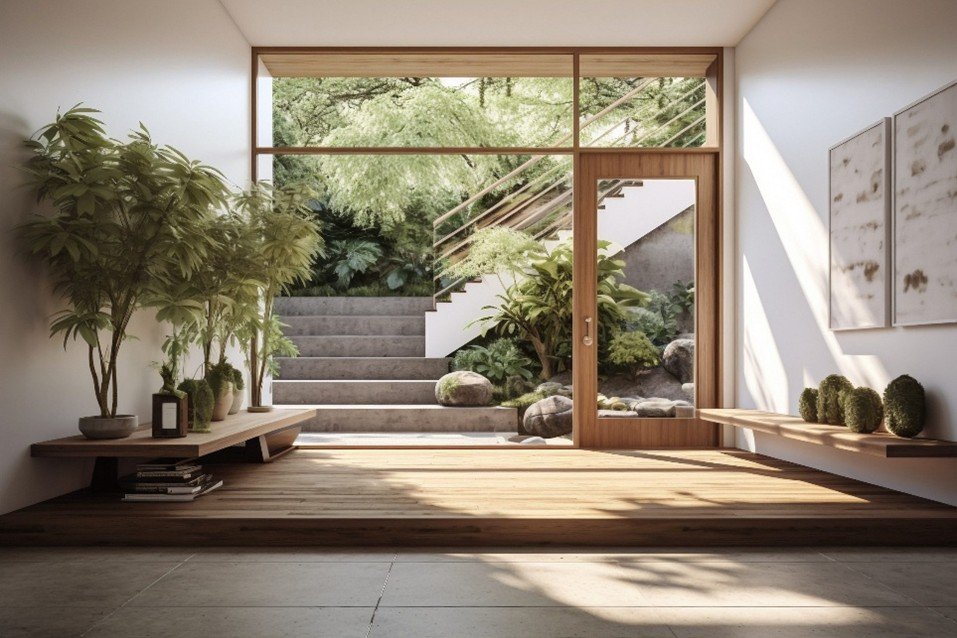
Descubre los principios fundamentales del diseño de interiores y exteriores para crear espacios armoniosos que conecten el interior y el exterior con estilo y funcionalidad.
Por el equipo editorial / 31 de octubre de 2025
El diseño de interiores y exteriores se ha convertido en un enfoque clave para integrar a la perfección los espacios interiores y exteriores, creando entornos continuos y funcionales en armonía con la naturaleza. Un diseño eficaz se basa en la continuidad visual y funcional, la coherencia de los materiales, la armonía cromática y soluciones arquitectónicas específicas como paredes corredizas de vidrio, pérgolas y pavimentos continuos.
La inteligencia artificial optimiza este proceso mediante generadores de arquitectura que crean conceptos y diseños alternativos, simulan escenarios y personalizan espacios según las necesidades del cliente. Este artículo explora los principios, beneficios y tendencias del diseño de interiores y exteriores, analizando las nuevas oportunidades que ofrece la tecnología aplicada al diseño.
Distribución del salón con acceso a una terraza.
¿Qué es la vida interior-exterior?
La integración de espacios interiores y exteriores es un enfoque arquitectónico y de diseño que busca eliminar la tradicional frontera entre el interior y el exterior, transformándolos en un único espacio fluido y funcional. No se trata solo de amueblar una terraza o un jardín, sino de diseñar una continuidad espacial donde los materiales, el mobiliario y las soluciones arquitectónicas creen una experiencia de vida coherente e integrada.
Los elementos clave de esta filosofía incluyen grandes aberturas acristaladas, como puertas correderas, sistemas plegables o paredes retráctiles que permiten que la fachada interior se abra completamente al exterior; continuidad de los materiales, donde los acabados de suelos y paredes fluyen sin interrupción, por ejemplo, utilizando el mismo gres porcelánico o madera tratada tanto en el interior como en el exterior; y una funcionalidad ampliada, donde las zonas exteriores se diseñan como auténticas estancias al aire libre equipadas con cocinas exteriores, salones o comedores concebidos para ser utilizados durante todo el año.
Este enfoque redefine el concepto de vivienda, convirtiendo el jardín, la terraza o el patio en una extensión natural del salón, la cocina o el comedor.
Beneficios: mayor luz natural, ventilación y conexión con la naturaleza.
La integración entre el interior y el exterior no solo resulta estéticamente agradable, sino que también aporta beneficios concretos en términos de confort, salud y sostenibilidad. Las grandes superficies acristaladas y la eliminación de barreras arquitectónicas permiten la entrada de más luz solar. Además de mejorar el confort visual, la luz natural ayuda a regular los ritmos circadianos y puede reducir el consumo energético derivado de la iluminación artificial.
La posibilidad de abrir completamente los espacios favorece la ventilación cruzada, mejorando la calidad del aire interior y reduciendo la dependencia de los sistemas de climatización mecánicos. Esta solución se enmarca dentro de las estrategias de refrigeración pasiva y cumple con los criterios de eficiencia energética establecidos en el Decreto Legislativo 192/2005 y sus posteriores modificaciones, que implementan las directivas europeas.
El diseño que integra interiores y exteriores también responde al principio de la biofilia, la tendencia humana a buscar el contacto con el entorno natural. La incorporación de vegetación, agua y materiales naturales mejora el bienestar físico y mental, reduce el estrés y realza la calidad percibida de los espacios habitables.
Tendencias actuales
Las tendencias actuales en la integración de espacios interiores y exteriores se orientan claramente hacia soluciones sostenibles, personalizables y tecnológicamente avanzadas. Los espacios exteriores se conciben cada vez más como extensiones de la zona de estar, dejando de ser simples jardines o terrazas para convertirse en espacios amueblados con sofás modulares, alfombras y accesorios que recrean la comodidad del interior.
Existe un creciente interés en la sostenibilidad y los materiales ecológicos, como maderas con certificación FSC, acabados reciclados, tejidos técnicos de bajo impacto y sistemas de producción respetuosos con el medio ambiente. La tecnología y la domótica se integran mediante iluminación LED regulable, calefactores y ventiladores inteligentes, y sistemas de audio/vídeo para exteriores conectados a la red de automatización del hogar.
El diseño modular y multifuncional es otra tendencia clave, con estructuras ligeras, pérgolas bioclimáticas y cubiertas retráctiles que permiten disfrutar del espacio exterior durante todo el año y adaptarlo a diferentes funciones. La avanzada personalización de colores, tejidos y texturas garantiza el confort en cualquier estación y la coherencia estilística con el interior, convirtiendo el espacio exterior en una extensión natural del hogar.
Estas tendencias reflejan una creciente demanda de viviendas resilientes, sostenibles y orientadas al bienestar, donde la relación con la naturaleza se convierte en algo fundamental sin sacrificar la comodidad ni la estética.
Principios fundamentales para un diseño interior y exterior eficaz
Un proyecto de diseño interior y exterior verdaderamente eficaz no puede dejarse al azar. Requiere principios rectores claros para garantizar la plena integración entre los espacios interiores y exteriores.
Continuidad visual y funcional entre el interior y el exterior.
El principio fundamental es transformar el interior y el exterior en un único espacio percibido. Esto se traduce en una continuidad visual, donde el jardín, la terraza o el paisaje siempre son visibles desde el interior. Grandes ventanales, puertas correderas o paredes transparentes no son barreras, sino marcos dinámicos que amplían la vista más allá de las paredes de la vivienda.
También implica continuidad funcional. El espacio exterior se concibe como una estancia más. Por ejemplo, el comedor interior puede abrirse a un espacio exterior equipado con una mesa y sillas a juego, o el salón puede extenderse hacia una terraza con mobiliario modular. Esto garantiza una circulación fluida y una mayor convivencia.
Desde un punto de vista técnico, el diseño debe incluir umbrales a ras de suelo y la ausencia de escalones, en consonancia con los requisitos de accesibilidad y las directrices sobre la usabilidad de los espacios habitables.
Uso de materiales coherentes y paletas de colores armoniosas.
La coherencia de materiales y colores es uno de los aspectos más delicados del diseño de interiores y exteriores. Siempre que sea posible, se eligen materiales aptos para ambos usos, como gres porcelánico con acabados antideslizantes, madera tratada para exteriores o piedra natural. Esto garantiza la continuidad estética a la vez que se cumplen los requisitos de resistencia y durabilidad frente a la intemperie.
La paleta de colores debe seguir una lógica de continuidad. Los tonos neutros como el blanco cálido, el beige, el gris topo y el gris, o los tonos naturales como el verde, el marrón y el arena, crean una transición gradual y armoniosa entre las dos áreas. El diseño de iluminación también juega un papel crucial. Es recomendable utilizar luminarias con características coherentes, como temperaturas de color a juego e intensidad regulable, tanto en interiores como en exteriores, para garantizar la uniformidad visual incluso de noche.
Un consejo práctico es preparar un panel de inspiración con materiales y colores durante la fase preliminar del proyecto, para evitar inconsistencias entre las especificaciones interiores y exteriores.
Cómo la inteligencia artificial puede apoyar el diseño de interiores y exteriores.
Gracias a las herramientas de IA generativa y a las plataformas de codiseño digital, ahora es posible explorar rápidamente muchas configuraciones de diseño, evaluar la continuidad de los materiales, la iluminación e incluso la usabilidad de los espacios, reduciendo drásticamente el tiempo y los costes en las primeras fases de desarrollo.
Codiseño para la generación de conceptos y diseños
La IA no sustituye al diseñador; actúa como un codiseñador digital que apoya a arquitectos e interioristas durante la fase creativa. Puede generar conceptos y renders a partir de un boceto, una descripción textual o una fotografía de referencia, produciendo imágenes fotorrealistas y variantes de distribución en cuestión de segundos. Esto permite visualizar de inmediato la relación entre el interior y el exterior, la distribución de la luz natural y el impacto de la elección de materiales.
La IA también puede analizar parámetros objetivos como la exposición solar, la ventilación natural, la sombra y la normativa local, y sugerir soluciones de diseño que mejoren la eficiencia energética y la continuidad visual entre espacios. Mediante el aprendizaje automático, interpreta las preferencias de estilo, las necesidades funcionales y los hábitos de uso del cliente, sugiriendo configuraciones que se adapten a su vida diaria. Un ejemplo concreto es la adaptación automática de paletas de colores y materiales para mantener la coherencia estilística entre el salón interior y la terraza.
De esta forma, el codiseño basado en IA se convierte en una herramienta interactiva. Diseñador y cliente pueden iterar sobre el proyecto en tiempo real, evaluando y modificando alternativas sin tener que esperar los largos plazos de entrega de las fases de renderizado tradicionales.
Ventajas de la IA: velocidad, variedad de soluciones y personalización.
La integración de la IA en los flujos de trabajo de diseño aporta beneficios tangibles que mejoran tanto la calidad como los plazos de entrega. Las representaciones automatizadas, las simulaciones solares y la generación de planos permiten obtener en minutos lo que antes requería días o semanas con los métodos tradicionales. Los algoritmos pueden explorar un gran número de variantes de diseño, sugiriendo configuraciones innovadoras, como nuevas relaciones entre la cocina interior y el comedor exterior o nuevas soluciones de pérgolas bioclimáticas.
Al mismo tiempo, las soluciones de IA pueden adaptarse a las necesidades específicas del cliente y del contexto, garantizando espacios a medida que se ajusten al estilo de vida y al entorno.
Ideas e inspiración para integrar espacios interiores y exteriores.
Un diseño interior y exterior bien planificado transforma la vivienda en un entorno fluido y funcional, ampliando la percepción del espacio y permitiendo disfrutarla en todas las estaciones.
Mediante decisiones de diseño específicas que armonicen el mobiliario, el suelo y la iluminación para crear continuidad, el salón y la terraza pueden convertirse en un único espacio social amplio.
La cocina, como corazón social del hogar, puede extenderse al exterior para acoger momentos sociales y culinarios, utilizando zonas de cocina al aire libre, barras de bar y espacios para comer que reflejen el estilo del interior.
El dormitorio y el jardín pueden crear juntos un verdadero oasis de relajación cuando la zona de descanso se conecta directamente con la vegetación, por ejemplo, a través de un patio privado, una pequeña terraza o grandes ventanales que dan a un paisaje cuidadosamente diseñado.

Publicar un comentario